
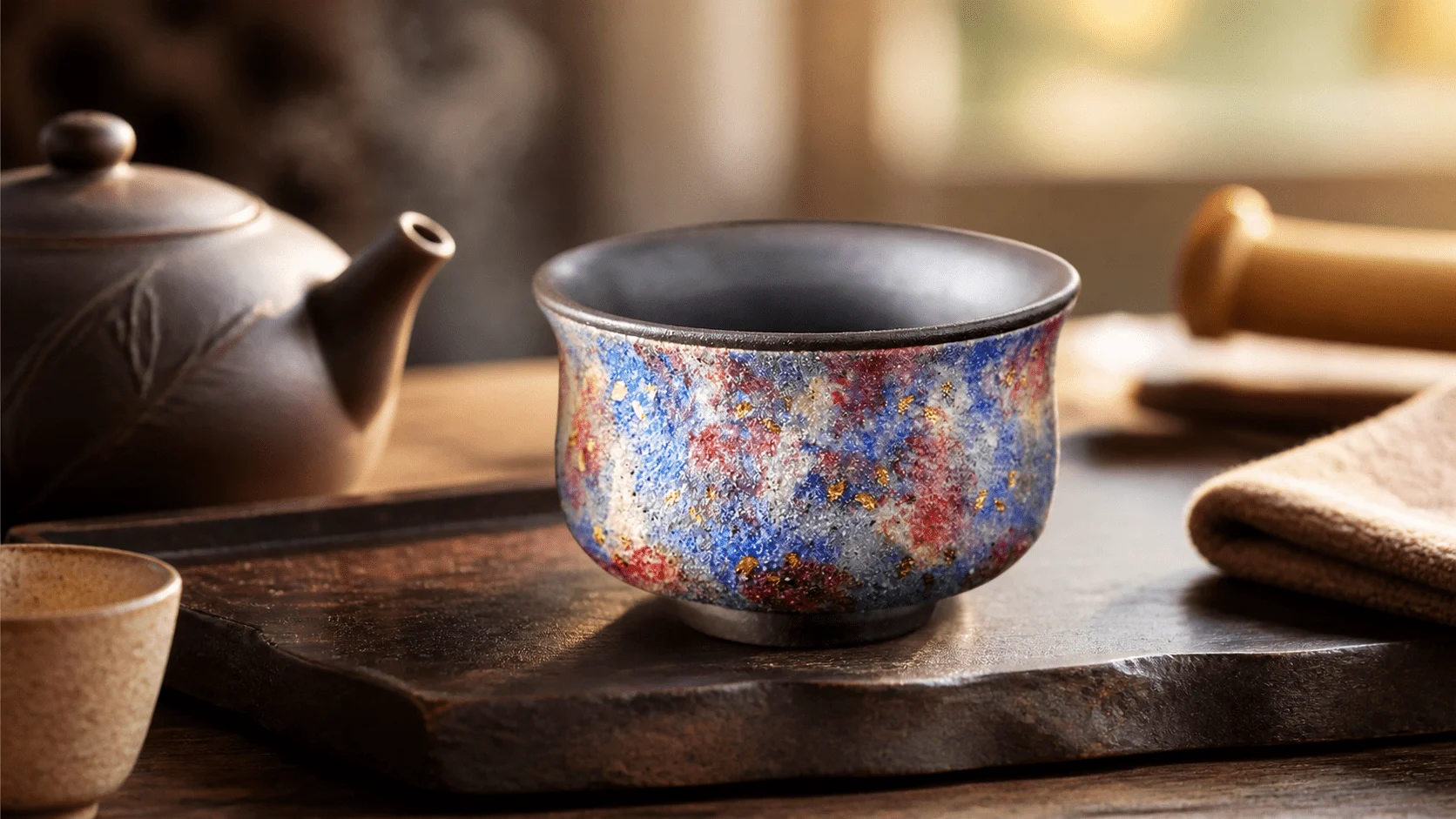
A Tenmoku tea bowl is more than a vessel for tea. It is the visible result of clay, glaze, fire, timing, and a maker decision. That is why the same form can feel completely different from one firing to the next.
From raw clay to a living surface
Jianzhan begins with a prepared ceramic body shaped for the hand. The bowl is trimmed, dried, and coated with an iron-rich glaze before it enters the kiln. At high temperature, minerals move through the glaze and create the depth, spots, lines, and quiet changes of tone that make Tenmoku recognizable.
Why handmade variation matters
Handmade does not mean unfinished. It means the final surface carries evidence of the process. Small shifts in thickness, atmosphere, temperature, and cooling can change the result, so each successful piece has its own visual rhythm.
The role of the maker
A maker controls the clay, proportions, glaze preparation, firing schedule, and inspection, while still allowing the kiln to participate. This balance between skill and uncertainty is part of what makes a handmade tea bowl feel alive.
How to choose a meaningful bowl
Start with the way you drink tea. Compare capacity, rim shape, foot, weight, grip, and how the glaze looks in natural light. A daily bowl should feel comfortable before it feels impressive.
A piece for daily ritual
The best handmade bowl is not only displayed. It is held, warmed, washed, and returned to the shelf. Over time, its surface becomes connected to the quiet routines of a home.
What to expect from a Tenmoku piece
Color and pattern may differ slightly from photographs because every firing develops differently. Natural variation is not a defect; it is the signature of the clay, glaze, fire, and time behind the piece.
Quick answers for Tenmoku teaware shoppers
Use this guide to connect the article topic with practical buying decisions: what Jianzhan Tenmoku teaware is, who it suits, how to choose a piece, and how to care for it after purchase.
How to use this guide before buying
Read the article first, then compare product photos, glaze variation, form, seller clarity, return policy, and whether the piece fits daily tea, display, collecting, or gifting.
Common buying mistakes to avoid
Avoid choosing only by dramatic claims, copied photos, unusually low prices, or vague master language. Use visible product details, clear use cases, care needs, and trustworthy shop policies.
Recommended next step
Compare a few real products side by side by size, glaze family, rim shape, capacity, price, and gift suitability instead of relying on one photo or one keyword.
What is Jianzhan Tenmoku teaware?
Jianzhan Tenmoku teaware is ceramic tea ware known for dark mineral-glaze effects and natural kiln variation. Common forms include tea cups, bowls, teapots, tea sets, and matcha bowls.
Who is it best for?
It is best for tea drinkers, ceramic collectors, and gift shoppers who value functional objects with visible handmade character. It is not ideal if every piece must look exactly identical.
How do I care for it?
Hand wash with warm water, avoid abrasive cleaners, and dry fully before storage. Gentle daily use helps preserve the surface and keeps the glaze easy to inspect over time.
How do I choose the right Tenmoku piece?
Choose by the main use first: daily tea, matcha, Gongfu brewing, display, or gifting. Then compare capacity, rim shape, glaze family, photos, and whether natural variation is acceptable for your needs.
Is Jianzhan Tenmoku teaware good as a gift?
Yes. It works well for tea lovers, ceramic collectors, birthdays, holidays, and housewarming gifts because it is both usable and visually distinctive.